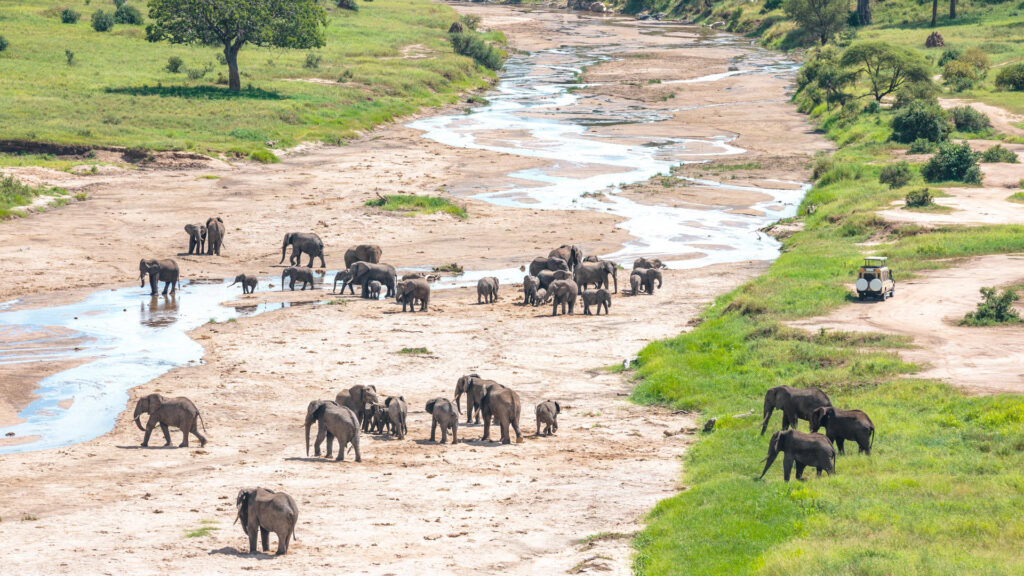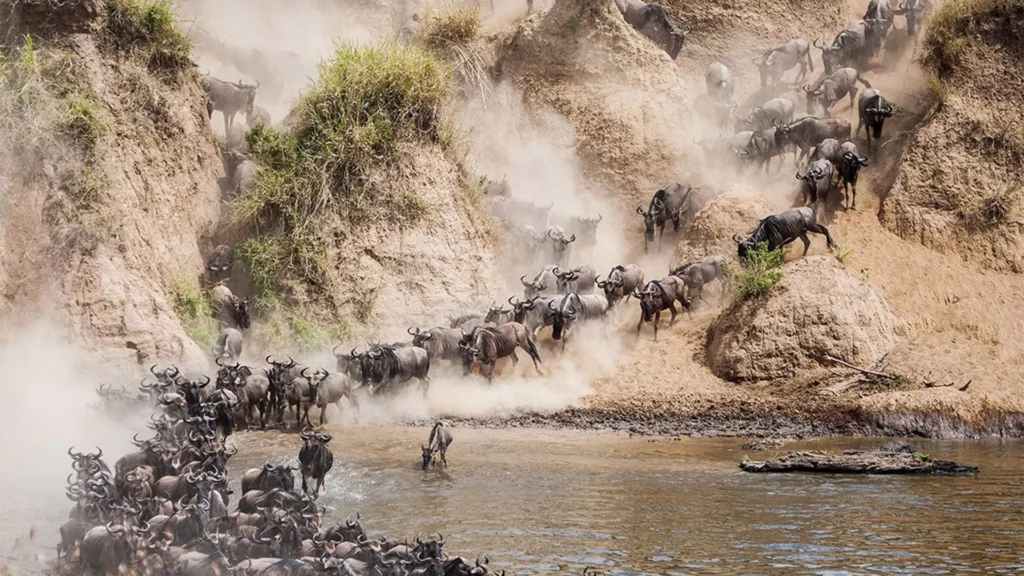
Between roughly late January and March, the short-grass plains of the southern Serengeti and the neighbouring Ndutu area of the Ngorongoro Conservation Area turn into a vast nursery. Hundreds of thousands of wildebeest calves are born within a few weeks, and the plains fill with new life.
Why the herds come to Ndutu
After the short rains, the volcanic soils of the southern plains produce grass that is especially rich in nutrients. The herds gather here to feed and give birth, and a newborn calf can stand and run within minutes — an essential skill on plains full of predators.
Predators at their most active
Where there are calves, there are lions, cheetahs, hyenas and leopards. Calving season is one of the best times of year to watch hunting behaviour, and cheetahs in particular are often seen on the open plains around Ndutu. Sightings can be intense, so it is worth thinking about how much drama you would like to see.
What the landscape is like
This is the green season. The plains are lush, skies are often dramatic and the light is excellent for photography. Short afternoon showers are possible, but mornings are usually clear.
Practical tips
- Stay two or three nights in the Ndutu or southern Serengeti area to follow the herds as they move.
- Off-road driving is allowed in parts of the Ndutu area, which can bring you closer to the action.
- Combine calving season with the Ngorongoro Crater, which is only a short drive away.
- Book early: camps in the area are popular at this time of year.
If you would like to see new life on the plains, calving season is a wonderful time to visit. Ask us about the best dates for your trip.