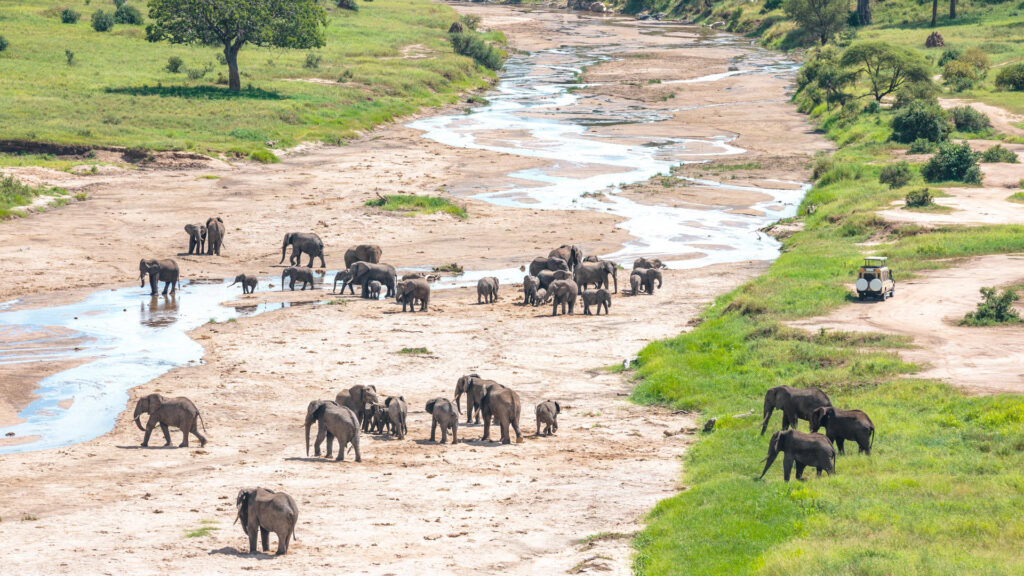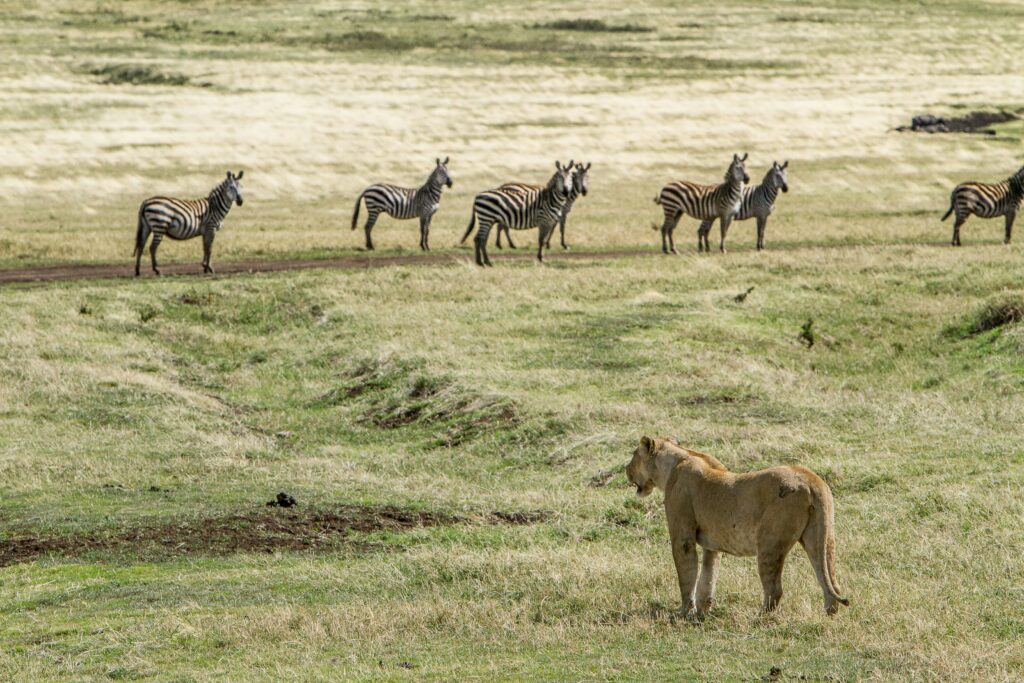
Every year more than a million wildebeest, zebra and gazelle follow the rains in a great loop through the Serengeti. The river crossings are the most dramatic chapter of that journey, and timing is everything.
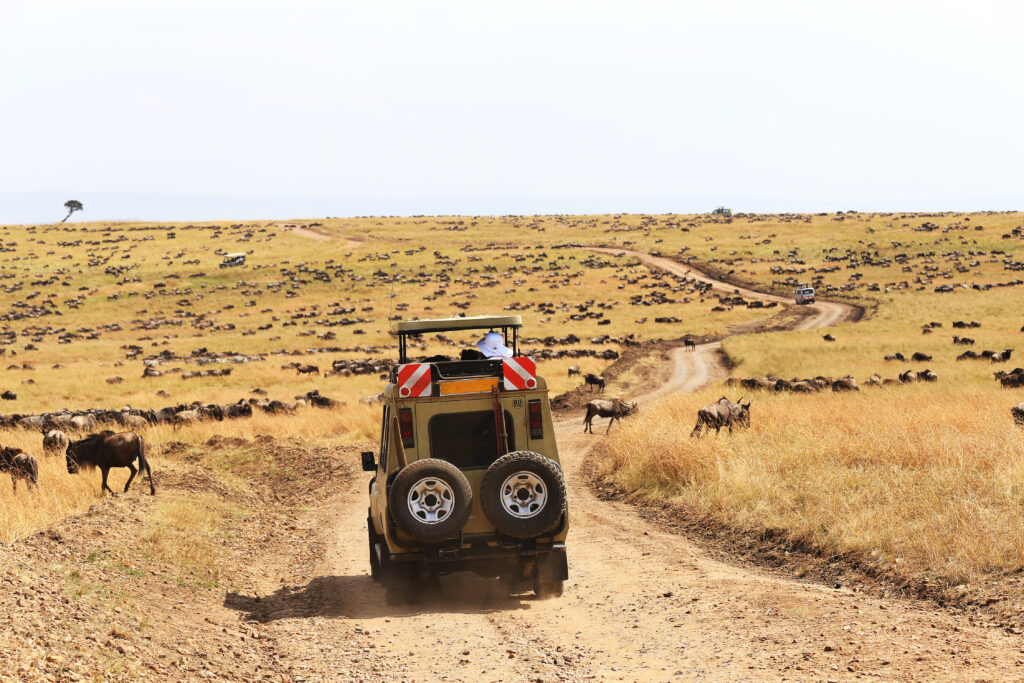
The migration never stops moving, so there is no single “best” week. Instead, think of the year in seasons. Where the herds are depends on where the rain has fallen and where the grass is fresh, which means the pattern shifts a little from one year to the next.
The Mara River crossings: July to October
From around July the herds push into the far north of the Serengeti and gather on the banks of the Mara River. Crossings happen in waves, sometimes several times a day, sometimes not for days at a time. Patience pays off: the best sightings usually go to guests who spend at least three nights in the north.
The Grumeti River: June and July
Earlier in the season, the herds pass through the Western Corridor and cross the Grumeti River. It is quieter than the Mara, with fewer vehicles, and the river’s large crocodiles make for unforgettable viewing.
“The crossings are never on a timetable. The magic is in the waiting.”
One of our senior guides
The migration calendar at a glance
| Months | Where | What’s happening |
|---|---|---|
| Jan – Mar | Southern Serengeti, Ndutu | Calving season |
| Apr – May | Central Serengeti | Herds on the move |
| Jun – Jul | Western Corridor | Grumeti River crossings |
| Jul – Oct | Northern Serengeti | Mara River crossings |
| Nov – Dec | Central to southern | Return south with the rains |
Tips for planning your trip
- Book 9 to 12 months ahead for July to September, when northern camps fill quickly.
- Choose a mobile camp that moves with the herds to stay close to the action.
- Fly between the north and Arusha to save a long day on the road.
- Combine the crossings with the Ngorongoro Crater for a well-rounded safari.